

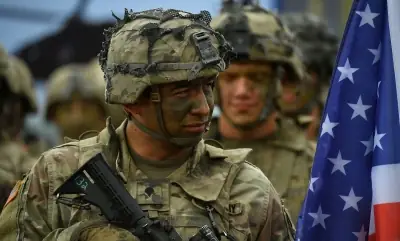
The Pentagon’s Central Command has confirmed the deaths of six US service members in a sweeping offensive against Iranian targets. This update comes as Operation Epic Fury intensifies, showcasing unprecedented US military might in the Middle East.
Fatalities were reported on March 2 during active combat, with two soldiers’ remains recently recovered after going missing. Operations persist at full throttle, and the names of the brave fallen will remain classified until families are informed.
Initiated early on February 28 per presidential directive, the campaign focuses on neutralizing Iran’s most dangerous capabilities. In the first 48 hours alone, strikes hit over 1,250 sites, crippling security networks that posed imminent risks.
The operation mobilizes an impressive array of assets: stealthy B-2 bombers alongside B-1s, advanced fighters from F-15s to F-35s, ground-attack A-10s, defensive Patriot and THAAD batteries, carrier strike groups with nuclear propulsion, destroyers armed with guided missiles, and persistent MQ-9 drones.
Precision hits have demolished IRGC command hubs, aerospace headquarters, air defenses, missile launchers, naval vessels, and submarines. F/A-18 squadrons hammer targets nonstop, backed by continuous Air Force sorties unleashing devastating payloads.
Iran’s naval footprint in the Gulf of Oman has been erased entirely—from 11 ships days ago to zero today. This ends years of Iranian aggression against merchant shipping in these strategic chokepoints linking the Arabian Sea and Strait of Hormuz.
Critical for global oil flows, disruptions in this corridor spike energy prices worldwide, hitting economies from the US to India hard. Restoring unhindered passage after eight decades bolsters trade security. The US military vows to protect these waters indefinitely.