

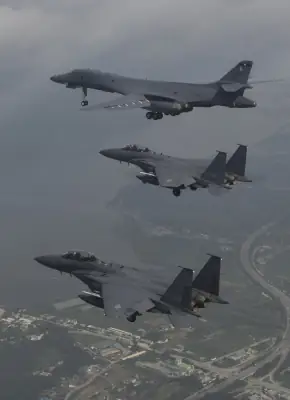
The specter of war loomed large as America unleashed its B-1 bombers on Iran in a daring transcontinental operation. Operation Epic Fury, kicked off in late February 2026, saw the US and Israel pummel Iran’s military backbone with waves of airstrikes, missiles, and sea-based firepower.
Open-source flight trackers lit up with unprecedented activity: three B-1B Lancers rocketing from American heartland bases straight to Iran’s missile silos and bunkers. These round-trip missions, spanning thousands of miles without refueling stops, were pinpointed by the Military Air Tracking Alliance, a consortium of 30 aviation sleuths.
Axios quoted a US insider verifying the strikes hit ‘ballistic missile and command sites above ground in Iran.’ The B-1’s reputation precedes it—stealthy, supersonic, and packed with massive payloads of 75,000 pounds, these birds excel at cracking the toughest nuts: underground fortresses shielding Iran’s arsenal.
In the opening salvo’s first day, US Central Command tallied more than 1,000 hits on enemy positions, from launch pads to headquarters. Iran’s counterpunch with drones and missiles rattled the region, claiming the lives of four injured American soldiers.
This high-stakes showdown reverberates worldwide, spiking energy costs and testing alliances. With B-1s bridging continents in hours, the message is clear: Iran’s provocations meet swift, overwhelming response. Yet, as hostilities mount, the international community braces for broader fallout.