

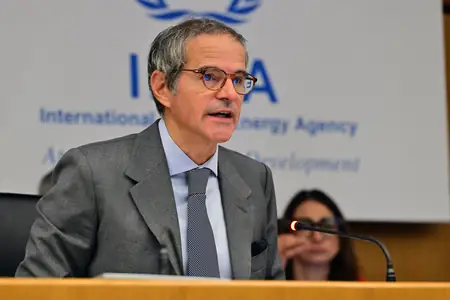
The head of the UN’s nuclear watchdog has delivered a tentative sigh of relief: Iran’s atomic infrastructure appears unscathed by joint American-Israeli airstrikes so far.
Rafael Grossi, IAEA Director General, addressed governors in Vienna, detailing how critical facilities including Bushehr and Tehran’s research reactor show no evidence of attack or disruption. Radiation levels across Iran’s borders remain normal, averting immediate environmental fears.
Yet, the picture is far from clear. Iranian officials have gone radio silent amid the chaos of war, leaving the IAEA in the dark despite persistent outreach attempts.
‘We’re pushing hard to reopen this crucial dialogue,’ Grossi said, his tone laced with urgency. He painted a dire scenario of potential fallout: strikes on nuclear sites could unleash radiation, necessitating the exodus of millions from urban centers.
With Israel and the US pounding targets and Iran firing back missiles, Grossi labeled the regional volatility ‘highly alarming.’ His plea was unequivocal – all sides must halt military escalation and embrace negotiation without delay.
This communication void underscores the IAEA’s frantic race against time, aiming to confirm safety and prevent any slide toward nuclear peril in the volatile Middle East.