

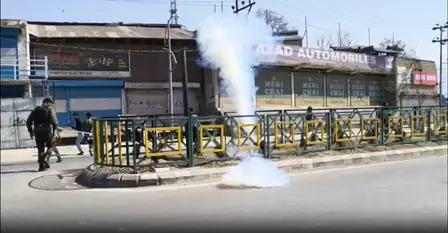
Reports of Ayatollah Ali Khamenei’s passing have triggered widespread agitation in Jammu and Kashmir, culminating in violent clashes in Srinagar on Monday. Protesters, mourning the Iranian leader, flooded the streets, leading to confrontations with law enforcement.
Preemptive measures were in place across Kashmir valleys, with curbs on movement and massive police presence. Despite these, crowds assembled, and the gathering soon spiraled into chaos. Security forces responded with tear gas and lathi charges, scattering the violent mob as seen in circulating visuals.
To curb misinformation and coordination, authorities cut off mobile and internet access in Srinagar. Educational activities ground to a halt: exams canceled, schools and colleges closed through March 3.
Lieutenant Governor Manoj Sinha, after leading a security assessment, appealed for calm on social media. ‘All communities must uphold peace and restraint,’ he posted on X.
Earlier, Chief Minister Omar Abdullah voiced alarm over Middle East flare-ups, particularly the Khamenei news. His team shared on X: ‘The CM urges everyone to stay composed and avoid actions that could lead to tension.’
This flare-up highlights how international developments reverberate in Kashmir, testing the region’s stability. With services down and institutions shut, the focus now shifts to de-escalation and monitoring potential aftershocks from the rumored leadership vacuum in Iran.