

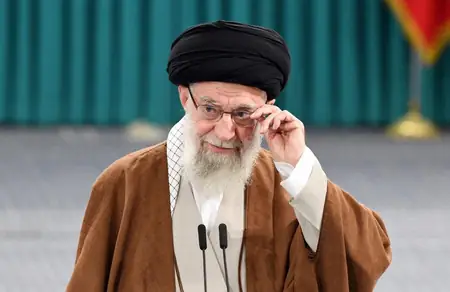
In a move that has diplomats reeling, the targeted killing of Ayatollah Ali Khamenei by US and Israeli forces threatens to upend the world economy. Analysts warn that visions of a smooth regime change in Iran are overly optimistic, predicting instead widespread economic fallout.
The strike, which eliminated the 46-year Shia regime’s linchpin, prompted fierce Iranian reprisals, igniting conflict across the Middle East. Critical chokepoints like the Strait of Hormuz face near-total blockade, while Dubai’s key airport closure underscores the immediate ripple effects.
Speaking exclusively, Veena Sikri, ex-Indian envoy, labeled it a ‘major shock to global economics.’ She pointed to derailed diplomacy: Oman’s Geneva mediation had shown promise, with Iran yielding concessions, only for Israel to strike preemptively, drawing in America.
‘This chaos hits at a vulnerable moment,’ Sikri emphasized. Veteran KP Fabian hailed the operation as a strategic coup backed by superior intel that pinpointed Khamenei’s location amid family members. Yet, he doubts it guarantees political overhaul in Tehran, given the vagueness of ‘regime change.’
Mahesh Kumar Sachdev offered a nuanced view of Khamenei’s legacy: a shrewd navigator who blended ideology with pragmatism over decades. He juggled internal power brokers—clerics, politicians, tycoons, courts—while fostering regional proxies and dialogue. Critics decried his methods as brutal, but his success in sustaining Iran’s revolutionary core is undeniable.
Oil-dependent economies shudder as supply chains fray. Stock markets plunge, inflation fears mount, and businesses worldwide recalibrate. This assassination doesn’t just alter Middle East power dynamics; it recalibrates the global financial order, with consequences that could linger indefinitely.