

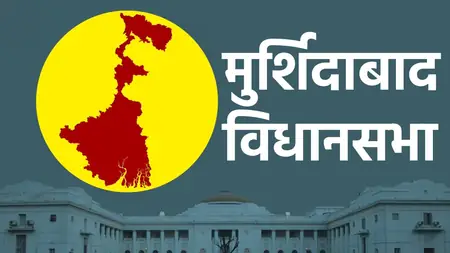
West Bengal’s political landscape is painted green with TMC’s triumphs, but Murshidabad assembly constituency remains a stubborn stain of opposition victories. From 1951 onwards, no TMC candidate has claimed victory here, even as Mamata Banerjee’s party grips the state since 2011.
Located in Murshidabad district, this seat (number 64) includes key areas like Murshidabad Municipality and Jiaganj Azimganj, falling under the Murshidabad Lok Sabha seat. BJP currently holds it after the 2021 assembly elections, continuing a legacy of anti-incumbent wins.
Murshidabad’s story is inseparable from Bengal’s glorious past. As the Nawabs’ capital, it was a beacon of culture and power until the British upended it at Plassey in 1757. That battle reshaped India, ushering in colonial era. The city, dotted with palaces, mosques, and gardens, preserves this heritage through icons like the grand Hazarduari Mahal, serene Motijheel lake, and ornate imambaras.
Economically vibrant, it excels in sericulture, intricate carvings, and traditional crafts, blending history with modern livelihoods dominated by farming.
Electorally, the seat’s 17 polls reveal quirky patterns: Congress ruled the roost early on with six terms, an independent shocked in 1962, followed by Left and Forward Bloc successes. TMC’s absence from the winners’ list is stark, especially in this Muslim-heavy belt, signaling deep voter disillusionment or strategic opposition unity.
As elections loom, TMC faces an uphill climb in this historic enclave, where legacy and loyalty favor foes over the ruling dispensation.