

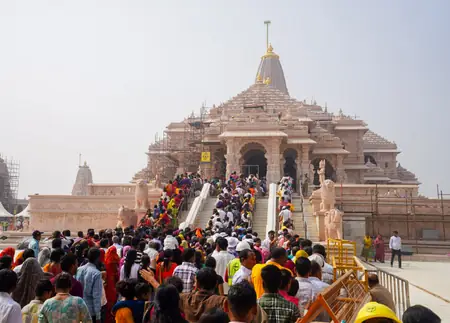
Mark your calendars, devotees: Ayodhya’s temples go silent on March 3, 2026, for the first lunar eclipse of the year. From early morning sutak to late evening reopening, here’s everything you need to know about the shutdown.
Starting at 3:19 PM, the Chandra Grahan unfolds until 6:07 PM, captivating skies over India. Yet, the sutak yoga activates nine hours ahead, locking temple gates from about 8 AM through 8:30 PM. Ram Mandir and every major shrine in the district follow suit—no exceptions for common worshippers.
Local authorities have issued timely alerts to prevent chaos. ‘This tradition safeguards sanctity during eclipses,’ explained District Collector Nikhil Tikaram Funde. Post-eclipse, after purification rites, doors swing open for normal darshan.
The closure isn’t unique to Ayodhya; it’s a pan-India affair, with most temples observing similar protocols. For those eyeing a spiritual trip, reroute plans—visit pre- or post-March 3 to bask in uninterrupted reverence.
Delving deeper, this eclipse aligns with Vedic tenets where lunar shadows demand withdrawal from mundane activities. Ayodhya’s faithful, buoyed by recent temple glories, embrace these pauses as moments for introspection, blending ancient wisdom with contemporary pilgrimages.