

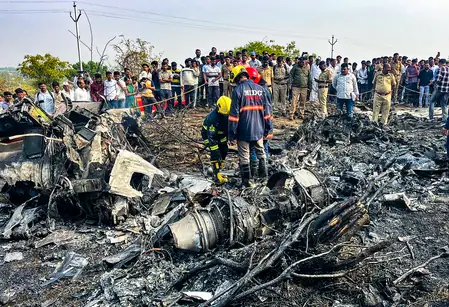
In a significant update, the AAIB on Saturday submitted its preliminary findings into the January 28 Baramati aviation disaster that killed Ajit Pawar and four companions. The report, based on initial evidence collection, warns that its contents are tentative and not for drawing conclusions yet.
Adhering to international standards, the inquiry’s focus remains on enhancing safety protocols rather than fault-finding. The pilots, Pilot-in-Command (PIC) and First Officer (FO), boasted extensive experience with VIP operations and non-controlled aerodromes, including multiple landings at Baramati.
Crucially, both underwent pre-flight breath analyzer tests inside the aircraft, administered by medical personnel. Video evidence and test slips confirmed negative outcomes, ruling out alcohol impairment preliminarily.
Weather played a pivotal role: visibility stood at just 3,000 meters against the VFR threshold of 5,000 meters. AAIB urges immediate actions like intensified monitoring of small airports, licensing audits, and bolstering weather and landing facilities.
With the cockpit voice recorder analysis pending—set for collaboration with NTSB—the full picture awaits. This incident highlights vulnerabilities in India’s general aviation sector, prompting demands for comprehensive regulatory overhauls to safeguard lives.