

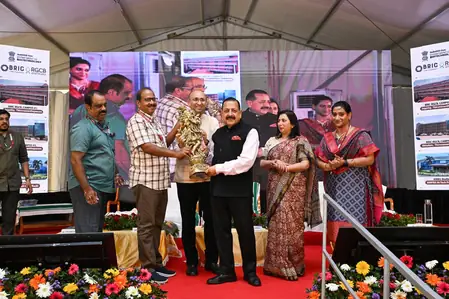
In a bold push toward a bio-driven economy, Union Minister Jitendra Singh championed the BioE3 vision during his visit to Thiruvananthapuram. On Saturday, he inaugurated critical infrastructure at the BRIC-Rajiv Gandhi Centre for Biotechnology’s Akkulam campus, including a cutting-edge cGMP facility foundation and the National Facility for Recombinant Cells and Sensors.
Singh’s speech painted a vivid picture of biotechnology’s central role in India’s future. The BioE3 policy, he said, represents a strategic long-term vision that aligns scientific breakthroughs with economic growth, environmental protection, and job creation. This framework sets India apart as one of the few nations with such a comprehensive biotechnology policy.
Turning to nuclear medicine, the minister applauded recent government liberalizations that broaden research scopes. He called for robust collaborations between public R&D bodies and private sectors, especially under the Nuclear Medical Mission, which opens doors to innovative integrated research and real-world applications.
The event also featured the launch of the campus’s annual Science Day, celebrating institutional milestones. RGCB has emerged as a leader in molecular biology, genomics, and cancer studies, drawing top talent with its advanced sequencing and bioinformatics prowess. Singh credited the last ten years’ unprecedented focus on science for these strides.
Echoing global trends, Singh referenced the Biopharma Shakti Mission, affirming that the world economy is swiftly becoming bio-centric. Dr. Rajesh Gokhale elaborated on BioE3’s six pillars, including bio-manufacturing, and highlighted the HPV vaccination program’s success using RGCB data.
Facility Director Dr. T.R. Santhosh Kumar showcased the recombinant facility’s 600-700 stable cell lines targeting cancer pathways, positioning it as a global hub. The new cGMP setup promises affordable cell and gene therapies, democratizing access to futuristic treatments and solidifying India’s biotech leadership.