

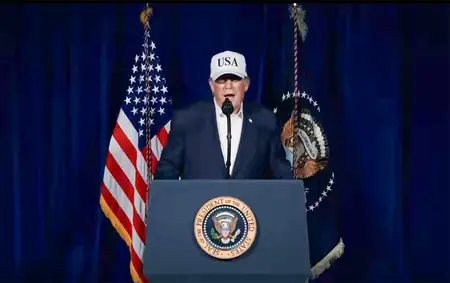
President Trump’s authorization of airstrikes against Iran has plunged Washington into chaos, with opposition voices decrying the operation as an unlawful power grab. What began as targeted hits has ballooned into a broader assault, prompting urgent questions about congressional oversight and the path to potential war.
The backlash from Democrats is intense and multifaceted. Mark Warner, vice chair of the Senate Intelligence Committee, detailed how the strikes extended beyond military infrastructure to assassinate top Iranian commanders. He cautioned that such escalation could entangle America in a protracted regional conflict, complete with thorny legal hurdles under the Constitution.
Elizabeth Warren, a leading progressive voice, labeled the decision a solo act of warmongering. ‘We can’t afford endless wars built on lies while ignoring our own people’s needs,’ she declared, urging an immediate congressional review.
Gregory Meeks from the House went further, terming it a blatant misuse of authority that bypasses Congress entirely. Bernie Sanders joined the chorus, accusing Trump and Netanyahu of orchestrating an unconstitutional offensive that’s misleading the nation into unnecessary bloodshed.
A chorus of Democratic figures voiced alarms over troop safety, civilian risks, and the absence of a coherent exit strategy, insisting on formal war powers invocation.
Republicans, conversely, rallied behind the president. Roger Wicker praised the precision and necessity of defending American interests. Brian Mast pointed to decades of Iranian hostility as justification for the decisive retaliation.
In Texas, Governor Greg Abbott ramped up state security protocols. Federally, a State Department task force is working overtime on citizen evacuations and backchannel diplomacy.
This unfolding crisis underscores deep divisions in US foreign policy. With intelligence briefings underway and votes looming, the Iran strikes could redefine executive limits and test the resilience of America’s democratic checks and balances.