

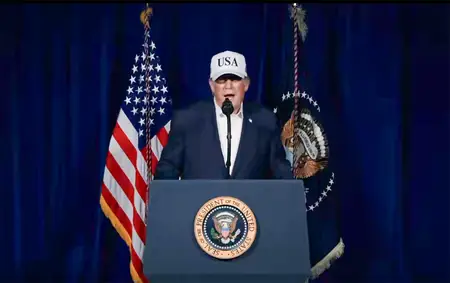
In a bold prime-time address, President Donald Trump revealed that American forces have initiated a massive military campaign inside Iran. ‘Surrender your weapons for safety, or prepare to die,’ he told Iranian troops, while urging ordinary Iranians: ‘Your moment of liberation is here.’ Civilians were ordered to shelter in place amid fears of widespread airstrikes.
‘Do not venture outside—danger lurks everywhere, with bombs potentially dropping at any moment,’ Trump emphasized. The strikes follow earlier operations designed to eliminate threats to US personnel and dismantle Iran’s aggressive capabilities. Trump lambasted the Iranian leadership for decades of enmity, citing key incidents like the Tehran embassy hostage crisis and the deadly Beirut attack on US Marines.
‘Iran remains the foremost state sponsor of global terror and will never possess nukes,’ he affirmed, pointing to the successful demolition of key nuclear sites—Fordow, Natanz, and Isfahan—during Operation Midnight Hammer last June. Iran, he said, has spurned all chances for de-escalation.
This sweeping assault aims to obliterate Iran’s missile production and naval assets, preventing further threats to America. Trump was candid about casualties: ‘Our heroic troops may fall, and injuries are inevitable in battle.’ Experts view this as America’s most significant Middle East intervention in generations.
The implications ripple globally, especially for India. Long-standing cultural bonds with Iran, combined with deepening US ties, mean any extended war could jolt oil markets, unsettle the region, and endanger expatriate Indians across West Asia.