

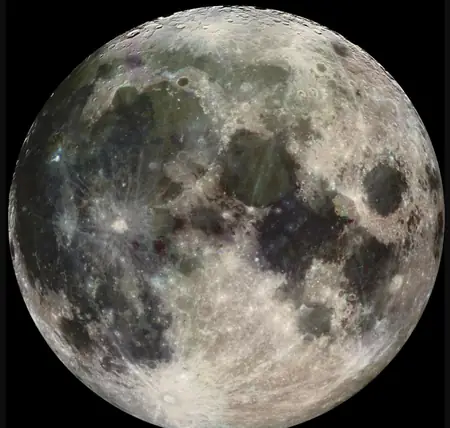
Picture this: a colossal moon emerging from behind distant peaks at dusk, dominating the skyline with its radiant glow. Photographers chase these moments, but what’s really happening? The moon isn’t growing; it’s our perception playing games, as detailed by space experts.
Scientific scrutiny, including precise angular measurements, shows the moon subtends the same 0.5-degree arc whether skimming the earth or soaring zenith-high. The horizon effect is purely psychological, rooted in how brains gauge size against context.
Foreground elements are key culprits. Trees, horizons, and structures create a sense of vast distance, prompting our visual cortex to upscale the moon accordingly. Remove the scenery – via tube or inverted gaze – and the moon shrinks to true form.
Pro tip for skeptics: Snap photos at identical zooms. The low-horizon moon might appear slightly flattened due to atmospheric refraction, bending light rays, but never enlarged.
That warm, amber tint? Atmospheric filtering at play. Lengthier light paths scatter shorter blue rays, enriching longer oranges and reds – much like sunsets. Dust or smog intensifies the drama.
Leading explanations invoke angular size illusions like Ponzo, where parallel lines converging in the distance warp judgments. Alternative views suggest dome-shaped sky models in our minds exaggerate overhead distances.
Intriguingly, orbital observers experience it too, fueling debates on hardwired neural mechanisms. Long studied yet unsolved, the moon illusion captivates, urging us to question what we see under starry vaults.