

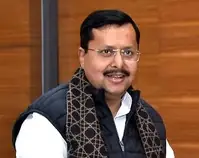
On the 61st death anniversary of Dr. Rajendra Prasad, India’s inaugural President and Bharat Ratna awardee, BJP’s top brass including president Nitin Nabin led a wave of commemorations. The event, observed nationwide, revisited the profound impact of a man who embodied simplicity amid grandeur.
In an emotional X post, Nitin Nabin offered humble shraddhanjali, noting Dr. Prasad’s pivotal role in protecting constitutional ethos and fortifying democracy. His life of unassuming service sets a benchmark for public figures, promising to motivate generations in upholding national ideals.
Echoing similar sentiments, Nitin Gadkari extended greetings, while Bihar’s Nitish Kumar marked the nirvan diwas with reverence. Yogi Adityanath portrayed him as an iconic freedom warrior whose disciplined, truthful existence inspires moral pathways today.
Delhi’s Rekha Gupta hailed Dr. Prasad as an icon of selfless devotion, from battling for independence to unifying the nation through the Constitution. Haryana’s Nayab Saini credited him with laying democracy’s bedrock, praising his unmatched contributions and high principles. Uttarakhand’s Pushkar Singh Dhami saluted his sacrifices, impartiality, and establishment of presidential precedents.
These tributes from diverse leaders highlight Dr. Prasad’s multifaceted legacy: scholar, activist, and statesman. Born in 1884 in Bihar, he rose through Gandhian movements, endured imprisonments, and later guided India’s constitutional birth. Even after two terms as President from 1950 to 1962, he lived frugally, rejecting opulence.
Today, as political figures invoke his name, it prompts reflection on leadership in turbulent times. Dr. Prasad’s story reaffirms that true greatness lies in service, not power—a timeless lesson for India’s evolving democracy.