

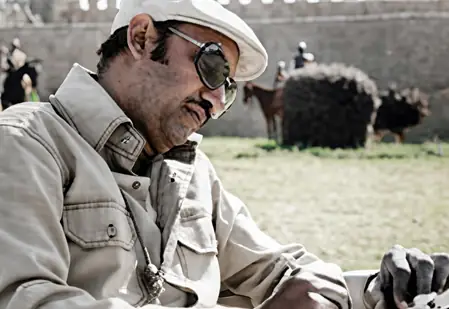
Manmohan Desai wasn’t just a director; he was a box office magician who turned 1970s Bollywood into a festival of family dramas and fistfights. With seven Silver Jubilees and four Golden Jubilees under his belt, his films packed theaters for months, blending action, laughs, tears, and songs that still echo today.
Hailing from Mumbai, Desai was born into filmdom on February 26, 1937. His producer father Kikubhai’s sudden death when Manmohan was merely four plunged the family into financial ruin. Selling assets to survive instilled in him the narrative core of lost families rediscovering each other—a motif that resonated deeply with India’s masses.
Thanks to brother Subhash, Desai stepped into films as an assistant. His breakout ‘Chalia’ in 1960, featuring Raj Kapoor and Nutan, hit big with memorable melodies like ‘Teri Raahon Mein Khade Hain’ that captured hearts nationwide.
1977 was Desai’s annus mirabilis. Four releases—’Amar Akbar Anthony’, ‘Dharam Veer’, ‘Chacha Bhatiija’, and ‘Parvarish’—all stormed to victory. ‘Amar Akbar Anthony’, with its trio of brothers separated at birth, didn’t just succeed; it revolutionized the genre, running for Silver Jubilees across cinemas and cementing Desai’s genius.
Silver Jubilee: 25 weeks. Golden Jubilee: 50 weeks. These milestones were Desai’s playground, where he achieved an unrivaled sequence of successes that no one has matched.
Life off-screen was no less turbulent. Widowed and emotionally shattered, Desai got engaged to Nanda but met a untimely end on March 1, 1994, falling from his home balcony in Mumbai. Yet, his cinematic empire of emotion and entertainment continues to thrill, a blueprint for Bollywood’s enduring appeal.