

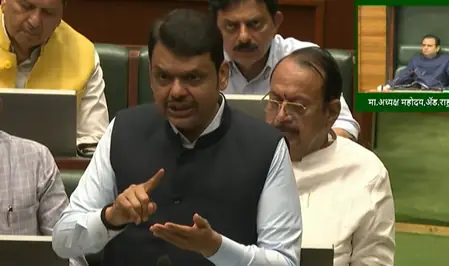
In a bid to address immediate fiscal needs without expanding the deficit further, Maharashtra Chief Minister Devendra Fadnavis introduced supplementary grant demands worth ₹11,995 crore in the state assembly on Tuesday. This calculated step reflects the government’s commitment to targeted spending in a high-debt environment.
Breaking down the demands, ₹3,112.85 crore will subsidize power tariffs for farmers’ pumps, power looms, and textile sectors, providing much-needed relief to these vital economic segments. Industrial growth gets a boost with ₹803.94 crore allocated via incentive packages for SMEs, large enterprises, and mega infrastructure projects.
Renewable energy takes center stage with ₹4,792.02 crore routed from AIIB loans to Mahavitaran for solar pump installations, accelerating the net-zero goals and 52% renewable energy target by 2030. Additionally, ₹1,431.05 crore is earmarked from the Centre for the Jal Jeevan Mission to enhance rural water infrastructure.
This latest tranche follows a troubling fiscal trajectory. The March 2025 budget under Ajit Pawar estimated a ₹45,890 crore revenue deficit. June saw ₹57,509.71 crore in supplements, breaching ₹1 lakh crore. December’s winter session added ₹75,286.37 crore, catapulting the deficit past ₹2 lakh crore, atop a projected ₹9.32 lakh crore debt for 2025-26.
Prudently, these demands eschew fresh spending, zeroing in on subsidies and incentives that support farmers and industry. CM Fadnavis, preparing for the March 6, 2026-27 budget, vowed fiscal austerity in a Sunday presser.
His WEF remarks painted an optimistic energy picture: 16 GW solar by 2025-end, scaling to 45 GW extra by 2032 (70% solar). Renewables have surged from 13% to a forecasted 52% by 2030, with farmer power costs slashed under ₹3/unit from ₹8, benefiting broader economy. A whopping ₹24,631 crore investment in 5,630 MW hydro pump storage further fortifies this green agenda.