

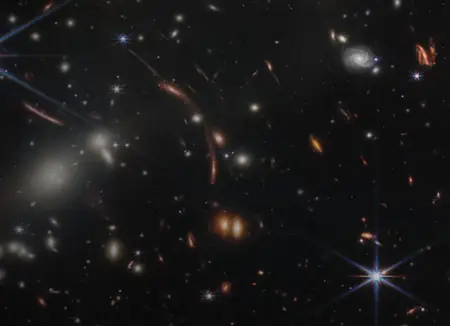
For decades, astronomers assumed the universe’s expansion would decelerate under gravity’s inexorable tug. Yet, observations shattered that view, revealing dark energy as the culprit behind accelerating cosmic growth—a puzzle persisting into the modern era.
NASA describes dark energy as comprising 68-70% of the universe, an unseen antagonist to gravity. The Big Bang set everything in motion 13.8 billion years back, from a hot, dense point expanding outward. Atoms coalesced, igniting stars and forging galaxies. Gravity should have braked this sprawl, pulling matter together.
Breakthrough came via Type Ia supernovae surveys in the 1990s. These uniform blasts serve as cosmic yardsticks; their dimness indicated surprising distances, implying speedup. Hubble’s sharp eye confirmed it: expansion accelerates, courtesy of dark energy’s push.
How does it operate? Unlike gravity’s attraction, dark energy repels, growing stronger in emptier space. Post-Big Bang, dense matter ruled; now, with galaxies isolated, it reigns. Is it Einstein’s cosmological constant, fluctuating fields, or exotic particles? Ongoing hunts with James Webb and ground observatories chase answers.
This force dictates our destiny. Eternal expansion risks a cold, empty ‘Big Freeze’; sudden shift could collapse all. As data pours in, dark energy remains cosmology’s greatest wildcard, urging humanity to peer ever deeper into the void.