

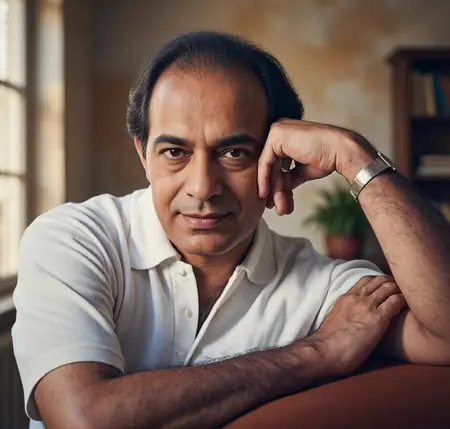
Hindi film music has seen countless transformations, but Talat Mahmood orchestrated one of the most profound in the 1950s. Hailing from Lucknow and born in 1924, he turned the playback singing landscape upside down by blending classical ghazal finesse with cinematic flair. Gone were the days of straightforward love ballads; Talat introduced a sophisticated layer of Urdu shayari that redefined songwriting.
What set him apart was that signature tremolo in his voice—a subtle vibration evoking deep melancholy and joy. Each word felt lived-in, delivered with restraint rather than force. This authenticity elevated film ghazals from novelty to staple.
Dominating the decade, hits such as ‘Jalte Hain Jiske Liye,’ ‘Shaam-e-Gham ki Kasam,’ and ‘Phir Wahi Shaam Wohi Gham’ demonstrated ghazals’ big-screen viability. While peers belted out high notes, Talat’s whispery intimacy carved his niche, enhanced by flawless pronunciation and literary command.
His impact rippled through the industry, inspiring music directors to explore ghazal rhythms. Audiences, drawn to the emotional richness, made it a beloved fixture.
Beyond India, Talat’s reach extended to 1960s East Pakistan, where he recorded Bengali tracks. His universal sweetness transcended linguistics, enchanting new listeners.
Today, amid electronic beats and fusion trends, Talat’s contributions shine undimmed. He proved subtlety could outshine volume, leaving an eternal imprint on Indian film music.