

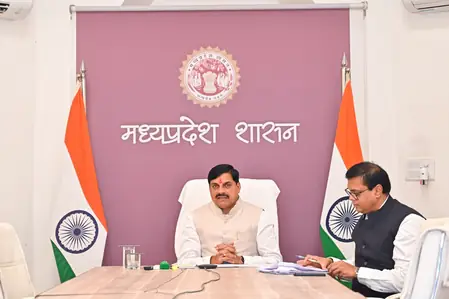
Madhya Pradesh continues its pioneering efforts in vulture conservation with Chief Minister Mohan Yadav personally releasing five rare vultures at Halali Dam near Bhopal. This carefully planned reintroduction highlights the critical importance of these birds in maintaining environmental health.
Among the freed vultures are four Indian vultures and a single Cinereous vulture, both classified as endangered. Forest officials fitted them with advanced GPS-GSM trackers at the Bhopal Vulture Breeding Centre after ensuring they were fully acclimatized.
CM Yadav highlighted Madhya Pradesh’s top position in vulture numbers nationwide. ‘We take pride in protecting these ecological helpers that keep our environment clean and disease-free,’ he remarked during the ceremony attended by conservation experts from Wildlife SOS and the forest department.
Vultures serve as nature’s sanitation workers, rapidly consuming dead animals and curbing infection risks. Their decline due to past veterinary drug misuse had alarmed experts, but MP’s breeding programs have reversed the trend.
The Cinereous vulture’s release holds special significance, as it migrates vast distances through the Central Asian Flyway – one of the world’s major bird corridors. This tracking data will provide invaluable insights into migration patterns across multiple nations.
Cultural reverence for vultures runs deep in India. Epic tales from the Ramayana portray Jatayu and Sampati as noble figures who sacrificed everything for duty and family, mirroring the birds’ selfless ecological role.
The state’s diverse vulture species include the White Scavenger Vulture, Long-billed Vulture, and Himalayan Griffon. A recent count in Panna forests spotted over 1,000 individuals, the largest flock observed lately, boosting hopes for full population recovery.
This release strengthens Madhya Pradesh’s reputation as India’s vulture capital, demonstrating how targeted conservation can restore balance to fragile ecosystems.