

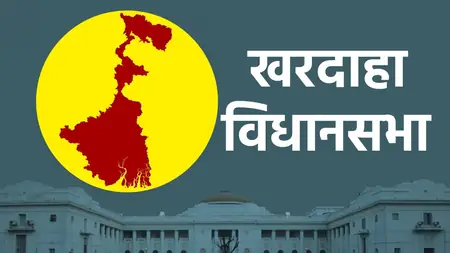
Khardaha, the densely populated urban enclave in North 24 Parganas, has long been a political battleground reflecting West Bengal’s volatile electoral dynamics. Once an impregnable fortress for the CPI(M) and Left parties for over half a century, the constituency flipped to TMC in 2011 and has remained under their firm grip since. But whispers of change are growing louder ahead of the 2026 polls, with BJP, Congress, and a resurgent CPI(M) gearing up to challenge Mamata Banerjee’s dominance.
Geographically, Khardaha thrives along the Hooghly’s eastern shore, enveloped by Titagarh (north), Patulia and Bandipur (east), Panihati (south), and the river (west). Its history traces back to 1877 as part of dual Barrackpore municipalities, gaining independence as Khardaha Municipality in 1920. The railway station on the Siyaldah-Ranaghat section splits it into Rahara (east) and Khardaha (west), while buses from Kolkata hubs ensure seamless connectivity.
The area’s cultural heartbeat pulses through iconic temples—Lakshmi Narayan and Shyamsundar/Ras Mandir—and the Ramakrishna Mission in Rahara. The annual mela transforms streets into a carnival of devotion and commerce, underscoring the constituency’s vibrant community spirit.
Seventeen elections have unfolded here, with Left’s 60-year reign ending in 2011’s TMC triumph. Kajal Sinha won in 2021, succeeded by Sovan Dev Chattopadhyay in a bypoll. Now, as rivals circle, BJP dreams of debut glory, Congress hunts for revival, and CPI(M) rallies for redemption. TMC’s nerves are frayed in this pivotal seat, where urban voters could rewrite history once more.