

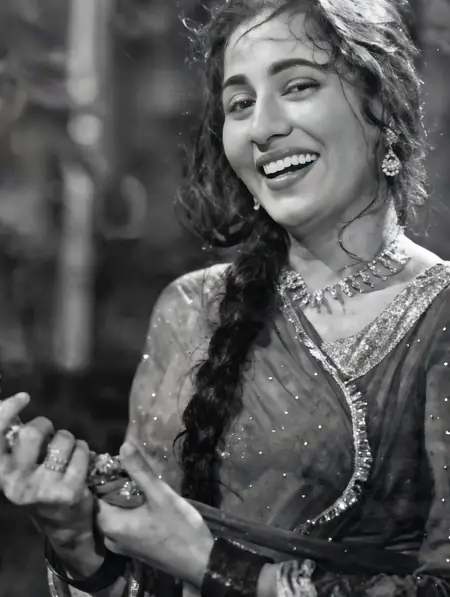
Madhubala, the eternal beauty of Hindi cinema, redefined rebellion with a steering wheel in hand. Mere months after her 12th birthday, she embraced driving—a feat that stunned 1940s India, where women behind the wheel were virtually unheard of. This wasn’t whimsy; it was a declaration of autonomy from a girl lightyears ahead of her epoch.
Her journey began in modest circumstances. Mumtaz Jehan, born Valentine’s Day 1933 in Delhi, saw her family migrate to Mumbai amid economic strife. Ataullah Khan’s dreams pushed his daughter into films at age nine, where ‘Basant’ introduced Baby Mumtaz to adoring audiences.
Renamed Madhubala for ‘Neel Kamal’ in 1947, she dazzled in blockbusters including ‘Mahal,’ the eerie hit that launched her stardom, and romps like ‘Chalti Ka Naam Gaadi’ with Kishore Kumar. Co-stars Dilip Kumar and Dev Anand praised her not just for looks, but for her progressive outlook exemplified by that early driving license.
Love stories added spice: a heartbreak with Dilip Kumar, followed by marriage to Kishore. But tragedy loomed as a heart condition emerged in the ’60s, filling her body with excess blood. Foreign specialists balked at operating, yet Madhubala’s resolve never wavered.
Boasting nearly 70 credits, she bid adieu at 36. Today, Madhubala inspires as the girl who accelerated beyond boundaries, leaving tire tracks on history.