

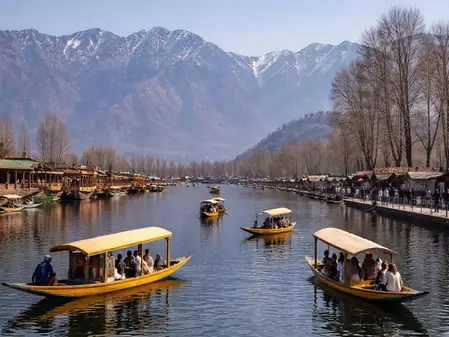
Unseasonal warmth gripped Srinagar on Saturday, with the mercury soaring to a record 21°C—the highest ever for February. This eclipses the prior benchmark of 20.6°C from 2016, as per meteorological records.
Such balmy conditions, about 10 degrees warmer than average, extended across the Kashmir Valley and Jammu division. Gulmarg hit 11.5°C, Pahalgam 17.2°C, Jammu 25.2°C (2.9°C above normal), Katra 25°C, Batote 19.9°C, Banihal 19.8°C, and Bhadarwah 21.3°C.
This anomaly follows a winter of scant precipitation. Jammu and Kashmir endured less than average rain and snow, especially during ‘Chillai Kalan’—the peak 40-day freeze that typically blankets the region in snow, feeding vital water sources.
The shortfall in snowfall has left glaciers and springs under-replenished, sparking fears of severe water shortages in the hot months ahead. Fruit growers, who rely on steady irrigation for orchards, and farmers are voicing growing alarm over potential crop failures and drinking water crises.
With February’s heat wave reducing prospects for late snowfalls, March emerges as a critical window. Any snow during this period could mitigate the risks, but current trends paint a worrying picture for the valley’s water security and economic stability.