

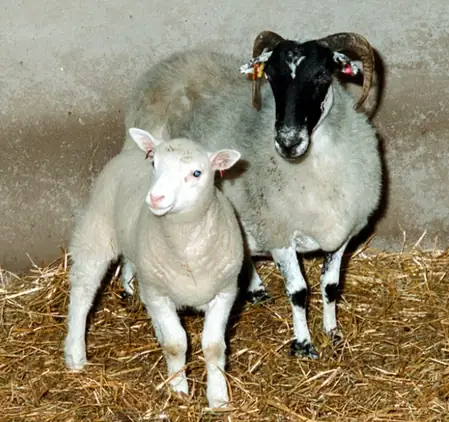
Imagine coaxing a single adult cell to build an entire living animal. That’s exactly what happened when Dolly the sheep bounded into existence, upending decades of scientific dogma. Created in Scotland’s Roslin Institute and unveiled to the world on February 22, 1997, Dolly’s birth on July 5, 1996, marked humanity’s first triumph in cloning a mammal from mature somatic cells.
The process was meticulous. Researchers, headed by Ian Wilmut, extracted the nucleus from an udder cell of an adult ewe. This genetic blueprint was transferred into a hollowed-out egg from another breed, jump-started with a jolt of electricity, and cultured into an embryo. Transferred to a surrogate, it developed into Dolly, a perfect genetic copy of the udder donor.
Prior to Dolly, cloning successes were limited to embryonic cells, presumed incapable of full reprogramming once specialized. Dolly demolished that barrier, demonstrating epigenetic reprogramming could restore pluripotency. Her success rate was slim—only one live birth from 277 attempts—but the proof of concept was undeniable.
Biomedical potentials exploded into view: cloning for drug production in animal milk, xenotransplantation organs, and disease modeling. Conservationists dreamed of reviving endangered species. However, the specter of human applications loomed large, prompting Vatican condemnations, UN resolutions, and laws in over 50 countries prohibiting human reproductive cloning.
Dolly’s own story added poignancy. She suffered from sheep pulmonary adenomatosis and osteoarthritis, leading to euthanasia at half her expected lifespan. Analysis showed her cells carried the donor’s age markers, hinting at ‘premature aging’ risks. Yet, her offspring thrived normally, and subsequent clones have shown improved health. Today, Dolly symbolizes the double-edged sword of biotech—immense promise shadowed by profound questions about life’s replicability.