

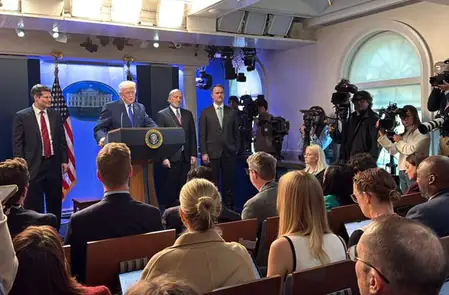
In a bold pivot, President Donald Trump responded to a stinging US Supreme Court ruling by slapping a 10% tariff on imports, prompting India’s Commerce Ministry to launch a comprehensive review. The high court’s Friday decision invalidated Trump’s earlier sweeping duties, ruling they violated the Constitution by sidestepping Congress’s exclusive trade powers under the 1977 International Emergency Economic Powers Act.
Trump’s press conference unveiled the countermeasure: a 150-day import surcharge starting February 24, powered by Section 122 of the 1974 Trade Act. Aimed at fixing ‘basic international payments issues,’ it spares essential imports like rare earth minerals, bullion metals, energy resources, fertilizers, select farm goods, drugs, electronics, and autos.
India’s official statement captured the unfolding drama: ‘We noted the Supreme Court’s import duty ruling yesterday. President Trump addressed it in a press conference. The US has signaled new actions. We’re assessing all ramifications.’ This comes amid heightened US-India trade tensions, with bilateral commerce topping $140 billion annually.
The White House emphasized the levy’s temporary nature, positioning it as a targeted fix rather than outright protectionism. Trump also tasked trade officials with Section 301 investigations into discriminatory foreign policies harming US interests. For Indian stakeholders, the real stakes lie in exposure: software, gems, jewelry, and apparel face potential hits if not exempted.
Economists warn of supply chain disruptions and inflationary pressures. New Delhi’s study will likely inform negotiations, possibly leveraging WTO forums. As Trump tests executive boundaries post-court smackdown, India’s measured vigilance underscores its role as a pragmatic global player navigating superpower volatility.