

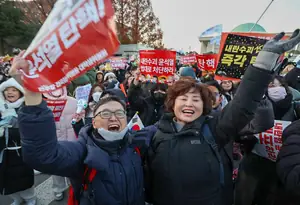
In a verdict sparking nationwide outrage, former South Korean President Yoon Suk Yeol escaped the death penalty, receiving life imprisonment for his short-lived martial law declaration last December. The February 19 ruling has ignited fierce political debates, with protesters flooding Seoul streets demanding execution.
Throngs outside the court initially celebrated the guilty verdict on rebellion charges, only to turn angry when life behind bars was announced instead of hanging. South Korea hasn’t carried out a death sentence since 1997, a de facto ban that courts uphold even in grave cases.
The backlash came swiftly from across the spectrum. Opposition Democratic Party leader Jung Chung-rae slammed the decision as undermining the grassroots resistance that stopped Yoon’s power grab. Human rights advocates, unions, and activists protested, labeling Yoon’s actions an assault on constitutional order through military coercion amid escalating political strife.
Recalling history, the case mirrors that of Chun Doo-hwan, convicted of treason and massacre in 1996 but ultimately pardoned after sentence reductions. Yoon’s accusers portray him as a modern threat to democracy, warranting the harshest penalty to prevent repeats. Under law, options were stark: death, lifelong hard labor, or life with possible parole after two decades—the latter bestowed.
Prosecutors argued death’s finality deters rebellion like Yoon’s failed emergency decree. Yet a counterview prevails among moderates: in democracies, justice reforms, not exterminates. This philosophy has shaped South Korea’s judicial caution on executions.
Polarization defines the reaction. Hardliners see weakness in the court; defenders hail procedural fairness. Yoon’s fall from grace highlights Korea’s fractured politics, where every ruling fuels the next street battle. The life sentence may close one chapter, but it opens fresh wounds in a deeply divided republic.