

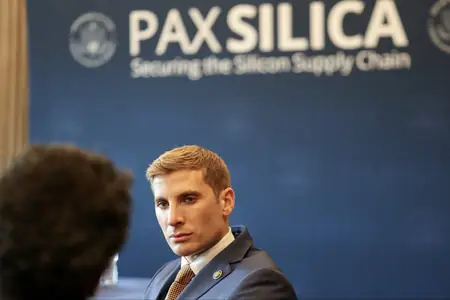
At the bustling India AI Impact Summit in New Delhi, US Ambassador Sergio Gor, Deputy Secretary Jacob Helberg, and White House OSTP Director Michael Kratsios took the stage, outlining a bold vision for bilateral AI cooperation. The highlight: signing the Pax Silica Declaration, described by Helberg as more than paper—it’s a blueprint for tomorrow.
Helberg captivated the audience with a historical anecdote about Alexander the Great. After traversing 11,000 miles, the conqueror met his match in India, learning the power of refusal. ‘India said no, and our nations were built on that resolve,’ he stated. Both countries stared down overseas kings, ignored elite advice, shattered colonial chains, and claimed their fates.
That rebellious fire still fuels US and Indian democracies, Helberg noted. Now, it’s urgently needed as economic security wavers. Over-reliant global supply chains leave allies vulnerable to coercion. A digital flick from afar plunged a major Indian metropolis into darkness, highlighting stark choices between sovereignty and survival.
Kratsios touted US AI supremacy, birthplace of frontier tech giants. Trump quickly recommitted to leadership, axing prior diffusion policies that hampered exports to allies. The AI Action Plan’s trio of innovation, infrastructure, and partnerships is propelling America ahead. Top AI firms’ valuations dwarf entire indices, with $700 billion earmarked for infrastructure—eclipsing Apollo missions.
Ambassador Gor stressed India’s non-symbolic role in Pax Silica. Boasting deep engineering prowess and advancing mineral processing, India counters challengers effectively. US-India policy alignments will supercharge AI adoption and sharing of reliable tech globally. This pact signals a new era of strategic alliance, empowering both nations to shape AI’s future on their terms.