

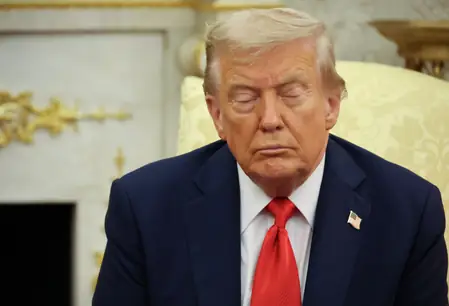
A cosmic controversy engulfs American politics, pitting Donald Trump against Barack Obama in a battle over extraterrestrial disclosures. Trump has instructed federal agencies to unearth and publicize every scrap of data on UFOs, aliens, and UAPs, promising revelations on these ‘complex yet crucial’ subjects.
Posting on Truth Social, the former president cited massive public interest as justification for his order to the War Secretary and others. This escalation follows Obama’s podcast admission: aliens probably exist due to the universe’s scale, but not stashed at Area 51 as folklore suggests. He insisted no alien encounters marked his presidency.
Trump fired back, accusing Obama of spilling guarded secrets. Obama clarified online that his time in office yielded zero alien proof, framing Area 51 legends as baseless—rooted in its history as a spy plane testing ground, per declassified 2013 CIA files.
Nevada’s infamous base remains a conspiracy magnet, rumored to house alien corpses and wreckage. Official narratives persist: 2022 military assessments and 2024 Pentagon reports label sightings as balloons, drones, or misidentifications—no otherworldly visitors confirmed post-WWII.
Public response to Trump’s gambit splits sharply. Enthusiasts buzz with anticipation for breakthroughs; detractors decry it as smokescreen tactics amid Epstein document scrutiny and domestic woes. Social platforms overflow with memes, theories, and debates.
This interstellar imbroglio highlights deeper divides: faith in government transparency versus fears of manufactured distractions. As files potentially flood out, one question looms—will truth be out there, or just more stars in politicians’ eyes?