

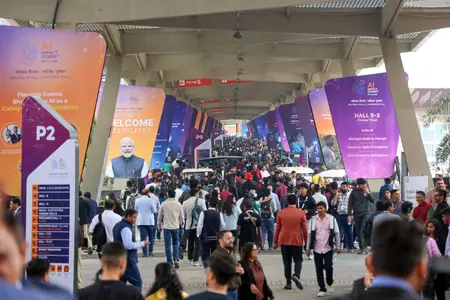
At the India AI Impact Summit-2026 in New Delhi, leaders from tech giants converged to demystify AI’s role in healthcare and beyond. The consensus? AI augments human expertise, not supplants it, saving doctors time for what matters most: diagnosis and empathy.
Roy Jacobs of Philips painted an optimistic picture. AI is already lightening loads in strained healthcare frameworks. Looking ahead, its legacy will be measured in improved lives across billions, not mere tech tweaks.
Alexander Wang from Meta shared an ambitious roadmap. India’s contributions are key to AI’s everyday integration. Imagine a personal AI that knows you better than anyone—your aspirations, hobbies, current tasks—delivering tailored support globally. But he cautioned: trust is paramount. Models must evolve alongside robust governance, or adoption falters.
Martin Schroeeter of Kindred AI urged readiness for scale. True innovation demands industrialized AI, backed by infrastructure, data, operations, and skilled teams. Its trajectory will be defined by reliable embedding in critical societal systems, far from isolated research silos.
Olivier Blum of Schneider Electric highlighted energy implications. Surging AI compute power intensifies global energy demands, yet it holds promise for smarter, efficient transitions.
The summit’s dialogues signal a paradigm shift: AI as a force multiplier for human potential, promising healthier lives and sustainable progress.