

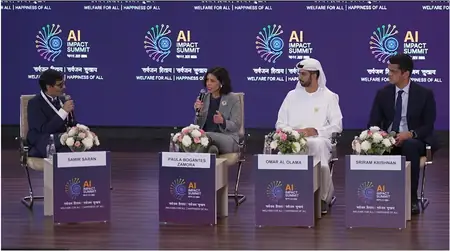
At the prestigious India AI Impact Summit 2026 in New Delhi, a high-level panel of international figures dissected the multifaceted world of AI governance. Discussions spanned national policies for AI adoption, robust infrastructure builds, spurring innovation, and crafting collaborative global regulations.
Panelists included Paula Bogantes Zamora from Costa Rica, UAE’s Omar Al Olama, US White House AI advisor Ram Krishnan, and ORF President Dr. Samir Saran. Krishnan detailed America’s AI strategy, resting on infrastructure excellence, innovation acceleration, and deepened alliances.
He spotlighted scaling data centers and compute resources with an eye on cost-effectiveness and sustainable energy. Entrepreneurs and tech builders, he said, thrive without red tape; regulators must provide clear, foreseeable rules protecting essentials like kids’ safety, IP rights, and security. Global tech pacts for shared capabilities and resilient supply chains were top priorities.
Omar Al Olama, pioneering as the first AI minister globally, framed UAE’s AI push as a quality-of-life enhancer for all. Key enablers: primed infrastructure, widespread AI education, and ethical rollout. He championed ongoing global dialogues, inclusive structures, and regulations that adapt proactively—gradual, consultative, and balanced between progress and precaution.
‘Regulation must keep pace without stifling,’ he noted, insisting every country joins the AI dialogue. Paula Bogantes Zamora voiced concerns for smaller economies, stressing self-audits on digital maturity: 5G rollout, AI plans, data rules, and R&D funding. She flagged global gaps in tech spend and infra, urging stage-specific regulations.
Regional alliances and coalitions, she argued, boost negotiation leverage. With data as prime wealth, Zamora called for worldwide talks on fair AI access and aids to bootstrap basics before advanced AI leaps.
Dr. Samir Saran steered talks on AI’s reach, spread, and multilateral paths, advocating equilibrium between bold innovation and prudent controls—encompassing safety nets, ethical guidelines, and people-first tech. Partnerships by region, theme, or values could safeguard inclusive governance amid tech’s sprint forward.
Wrapping up, speakers united on AI’s power to drive economies, uplift societies, and enrich lives. Success hinges on infra boosts, innovation fuels, ethical rules, and broad collaborations. This summit cements India’s platform as central to forging tomorrow’s AI world—safe, equitable, and visionary.