

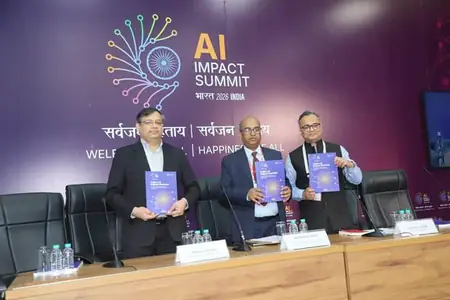
In a landmark revelation, voice AI and vernacular language interfaces are positioning themselves as the go-to tools for connecting with India’s marginalized populations. This insight comes from the ‘India’s AI Impact Startups’ report, unveiled Thursday at the India AI Impact Summit 2026.
The document notes a surge in developers betting on homegrown foundation models to power these technologies. It’s a strategic pivot aimed at bypassing traditional barriers like language and literacy, making advanced tech accessible to the masses.
Hailed by the Ministry of Electronics and IT as the inaugural comprehensive blueprint of India’s AI-for-good landscape, the report maps out how founders are innovating with context-aware, locally attuned solutions that resonate worldwide. The ecosystem is characterized by iterative testing and robust scaling efforts.
Featuring profiles of 110 startups and NGOs, the IndiaAI and Kalpa Impact publication delves into AI applications across healthcare, farming, learning, environmental challenges, finance access, city transport, and government services. Each domain illustrates AI’s potential for profound societal shifts.
“This is more than a list; it’s a roadmap,” stated Abhishek Singh, a key figure in MeitY and IndiaAI Mission. “Policymakers gain visibility into plug-and-play AI ready for national digital frameworks. Investors discover scalable, mature enterprises primed for growth. It fosters informed collaborations for broader adoption.”
Echoing this, Mohammad Y. Safirulla K. from India AI Mission observed, “We’re witnessing startups evolve from prototypes to mass-impact platforms. This report illuminates proven wins across sectors, guiding the Mission’s support for accelerated ecosystem development.”
With digital divides narrowing, voice AI in native tongues heralds a new era of equitable tech proliferation, empowering India’s diverse billions.