

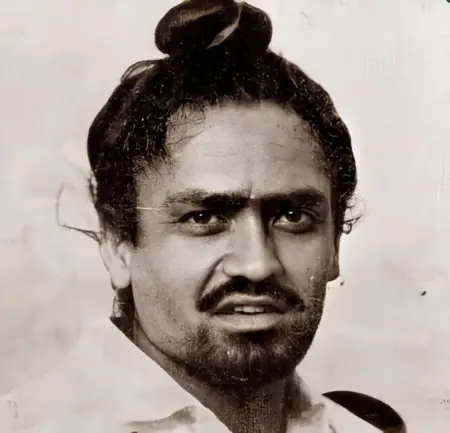
Jarnail Singh Dhillon’s legacy in Indian football is etched in gold—literally, with the Asian Games medal he helped secure. Captain of the national team from 1965 to 1967, this defensive maestro was born in 1936 in what is now Faisalabad, Pakistan. The 1947 Partition brought terror; violence claimed many relatives. In 1948, 12-year-old Jarnail fled in a truck packed with 50 frightened souls, crossing into Amritsar and embracing India as home.
Football became his anchor. Post-arrival, he honed his skills at Khalsa College, Mahilpur (1952-1956), then debuted senior-level with Khalsa Sporting Club, Hoshiarpur in 1956. Mohun Bagan beckoned in 1959, where he thrived until 1968, traveling to East Africa for high-stakes matches.
Known for his commanding presence as a center-back, Jarnail earned accolades as Asia’s finest in the ’60s. His international resume boasts the 1960 Olympics, gold at 1962 Asian Games in Jakarta, and a silver-medal run at the 1964 Merdeka Cup. On the domestic front, Santosh Trophy triumphs with Bengal (four times) and Punjab (1970-71) marked his prowess.
Jarnail didn’t hang up his boots quietly. He coached Punjab to Santosh glory in 1974-75. The Arjuna Award in 1964 crowned his playing career. Administratively, he shaped Punjab sports as Deputy Director (1985-1990) and Director (1990-1994).
His son Jagmohan emulated him, defending for India including at the 1993 SAARC Cup in Pakistan. After Jagmohan’s premature death, Jarnail relocated to Vancouver, Canada, where asthma claimed him on October 13, 2000, aged 64.
Jarnail’s odyssey—from dodging death in Pakistan to captaining India—embodies the unyielding spirit that defines true sporting heroes.