

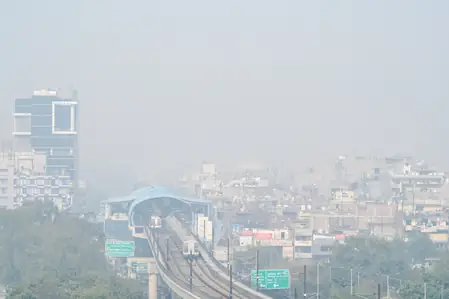
A breath of fresh air swept through the National Capital Region as light showers and brisk winds on Wednesday morning significantly improved the Air Quality Index (AQI). Many neighborhoods transitioned from orange (moderate to poor) to yellow (moderate) zones, providing much-needed respite from Delhi’s notorious winter pollution.
While the IMD anticipates ongoing morning mist, no severe weather advisories are active. This meteorological intervention has been a game-changer, dispersing stagnant pollutants that typically choke the city.
Delhi’s AQI readings paint a picture of progress mixed with challenges. Stations reported: Alipur 146, Anand Vihar 249, Ashok Vihar 181, Aya Nagar 119, Bawana 193, Burari Crossing 144, Chandni Chowk 227, CRRI Mathura Road 150, Dr. Karni Singh Range 177, and DTU 130. Areas with AQI between 100-150, including Aya Nagar and DTU, now qualify as yellow zone.
Noida stations logged Sector-125 at 197 (orange), Sector-62 at 146 (yellow), Sector-1 at 207 (orange), and Sector-116 at 158 (yellowish). In Ghaziabad, Indirapuram stood at 209, Loni at 241 (both orange), Sanjay Nagar at 148 (yellow), and Vasundhara at 210 (orange).
Temperatures on the day maxed at 27°C with mins at 13°C and humidity fluctuating between 50-90%. Looking ahead to Thursday and Friday, expect 28°C highs, 13°C lows, and misty mornings without alerts.
Pollution experts explain that the wind and rain effectively scattered fine particulate matter, leading to the observed dip in AQI. Sustained breezy conditions could propel even more areas into cleaner air categories, signaling a positive trend for public health in the coming days.