

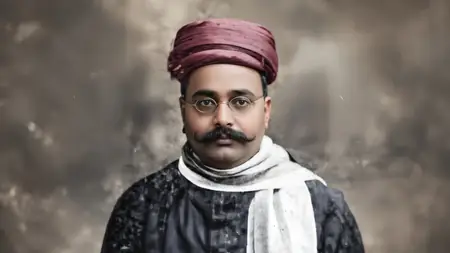
Gopal Krishna Gokhale stands as a pillar of moderate nationalism, whose influence rippled through India’s independence movement. A mathematics professor born in 1866 in Ratnagiri, he brought analytical rigor to politics, terrifying British administrators with his data-driven critiques.
Picture the scene: Gokhale rising in the Imperial Legislative Council, budget sheets in hand. Viceroys shifted uneasily as he laid bare the injustices of salt taxes draining the poor’s lifeline and military extravagance starving education. Lord Curzon, no stranger to arrogance, bowed to Gokhale’s logic.
Fresh from South Africa, Gandhi found in Gokhale a political guru. The advice was simple yet profound: observe silently for a year. This grounded Gandhi, transforming youthful zeal into the strategic wisdom that toppled empires.
Rejecting politics as a hobby, Gokhale established the Servants of India Society in 1905—a monastic commitment to nation-building. Recruits swore vows of poverty and exclusive devotion to India, eschewing family fortunes. This cadre prioritized societal foundations over spotlight.
Gokhale’s advocacy for Hindu-Muslim unity won admirers across divides. Jinnah aspired to emulate him, while Sarojini Naidu hailed him as unity’s greatest envoy. Tilak, his ideological foe, grieved his 1915 death as a national catastrophe.
His visionary ‘Political Will’ sketched self-rule, paving the way for constitutional reforms. Gokhale’s quiet revolution—fusing intellect, ethics, and foresight—remains a blueprint for principled leadership, reminding us that true change often whispers before it roars.