

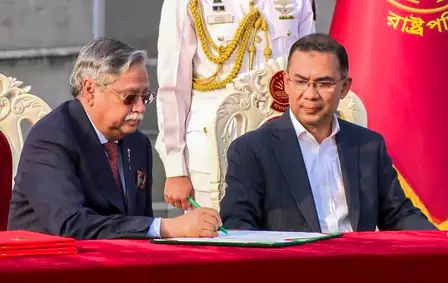
In a dramatic turn following BNP’s electoral victory, Tarique Rahman’s ascension to Prime Minister on Tuesday—with a 49-member cabinet—has been swiftly contested in court. A High Court petition challenges the February 12 referendum’s legality, calling for its results to be voided.
Filed by lawyer Mohammad Ataul Majid as a public interest case, the writ accuses the poll of being unconstitutional. ‘The constitution bars referendums, and the Election Commission lacks the power to hold them,’ it states, seeking judicial orders to declare it unlawful.
Media outlets like The Daily Star highlight the petition’s demand for official explanations from key figures, including the Chief Election Commissioner. Respondents include top bureaucrats, with hearings possibly starting next week under Justice Fatima Nazib.
Polling data shows 48 million ‘yes’ votes surpassing 22 million ‘no’ votes, claiming over 60% support for reforms. Tensions rose as Jamaat-e-Islami MPs boycotted oaths, rejecting BNP’s reform council seats. BNP parliamentarians, however, took oaths at the parliament house.
This legal battle could reshape Bangladesh’s power dynamics, exposing rifts between ruling coalitions and opposition forces. With Rahman’s government just forming, the court’s ruling may redefine constitutional boundaries and electoral integrity in the coming days.