

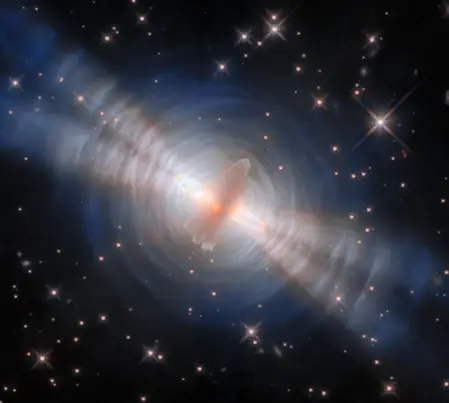
Imagine a stellar corpse spinning so furiously it completes over 700 loops per second, its magnetic poles flashing radiation pulses visible from billions of light-years away. Pulsars, the universe’s enigmatic neutron stars, are stealing the spotlight on social platforms, thanks to NASA’s compelling explanations of their bizarre behavior.
Born from the ashes of supergiant stars’ supernovae, pulsars are the ultra-compact leftovers. Picture squeezing the sun’s mass into a city-sized ball—density so immense that gravity warps reality. Their powerful magnetic fields, trillions of times stronger than Earth’s, accelerate particles to near-light speeds, generating the observed beams.
From our vantage, these emissions pulse rhythmically, mimicking a celestial strobe light. The discovery unfolded in 1967 when Cambridge astronomers detected anomalous radio signals. Mistaken briefly for alien communications, the ‘pulsing star’ revealed itself as a breakthrough, earning Nobel accolades for Antony Hewish and Martin Ryle in 1974.
Today, more than 2,000 pulsars pepper our galactic maps, each a unique timer. NASA’s NICER instrument, orbiting aboard the ISS since June 2017, specializes in X-ray scrutiny. It targets the scorching exteriors and hidden depths, capturing energy bursts that illuminate the star’s core composition.
Through high-resolution timing, NICER deciphers pulsar anatomy, testing theories on superdense matter. Observations of landmark pulsar PSR B1919+21 on its 50-year milestone provided pivotal data. ‘NICER’s precision will validate or challenge nuclear models,’ says lead scientist Keith Gendreau, highlighting its role in quantifying mass and radius.
Beyond science, pulsars anchor pulsar timing arrays, hunting gravitational waves and navigating deep space probes. Their unyielding cadence offers a stable cosmic clock amid the chaos. As telescopes advance, these ‘spinning neutron stars’ promise revelations about black hole formation, dark matter, and the cosmos’s fundamental laws, keeping astronomers—and now the public—spellbound.