

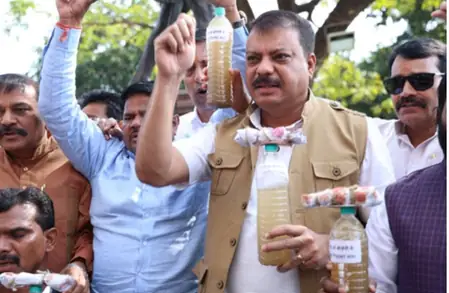
In a bold symbolic act, Congress legislators in Madhya Pradesh turned the state assembly into a battleground against contaminated water. Bottles of filthy water in hand, they protested deaths from tainted supplies in Indore, squarely targeting Urban Administration Minister Kailash Vijayvargiya for resignation.
Triggered by fatalities in Bhaagirthpura, the second-day budget session protest was spearheaded by Umang Singhar. MLAs assembled at Gandhi’s statue, wielding tainted water containers and protest boards, their voices rising in unison against governmental negligence.
Singhar painted a grim picture: multiple deaths from drinking polluted water, a scandal the government is allegedly sweeping under the rug. ‘Moral responsibility demands the minister step down immediately,’ he declared, urging strict measures against errant officers and robust policies for potable water access.
He lambasted the statewide malaise of sewage-contaminated supplies, debunking official claims of sanitation success. ‘Clean water isn’t optional—it’s a basic entitlement,’ Singhar asserted, slamming the avoidance of assembly discussions as anti-democratic.
Sachin Yadav, ex-Agriculture Minister, amplified the call, noting the shocking lack of accountability despite confirmed deaths. The demonstration signals Congress’s firm stance: no respite until justice is served.
As political temperatures rise in Bhopal, this episode exposes deep fissures in public health management. Indore, MP’s economic powerhouse, now symbolizes systemic failures. Will the BJP-led government respond with reforms, or escalate partisan divides during the crucial budget deliberations?