

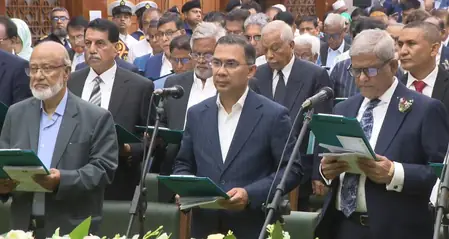
In a dramatic turn at Dhaka’s National Parliament, BNP’s triumphant lawmakers from the landmark 13th general elections swore allegiance on Tuesday, pointedly excluding any reference to the contentious Constitution Reform Council. The move is being hailed as a masterstroke by BNP chief Tarique Rahman against Muhammad Yunus’s interim administration.
With parliamentary leadership roles unfilled, Chief Election Commissioner AMM Nasir Uddin conducted the oaths per constitutional provisions. The event, coordinated by Secretariat Secretary Kaniz Mula, drew family members including Tarique Rahman’s wife Zubaida and daughter Jaida, who attended his swearing-in as Dhaka-17 MP.
Bangladeshi outlets like The Daily Star reported BNP’s unified refusal to sign reform council documents, following Tarique Rahman’s directive. This comes after the interim government’s July 2025 blueprint for reforms, crafted post-Sheikh Hasina’s 2024 downfall by Yunus and 30 parties.
Salahuddin Ahmed, a senior BNP figure, clarified the party’s position: no membership in the unelected council. Contrasting this, 11-party alliances including Jamaat-e-Islami and NCP mulled over oath abstention but proceeded, swearing in on-site.
The February 12 polls, coupled with a National Charter referendum, unfolded in 299 constituencies. BNP’s 209 seats fueled their alliance’s 212 triumphs, while Jamaat’s 68 propelled theirs to 77. NCP grabbed 6, independents 7, and minor outfits like Khilafat Majlish (2+1), Islamic Movement (1), Jatiya Party (1), Gonoadhikar (1), and Ganasanghati (1) also succeeded.
As alliances solidify, BNP’s stance foreshadows fierce parliamentary clashes over reforms, reshaping Bangladesh’s governance trajectory amid rising nationalist sentiments.