

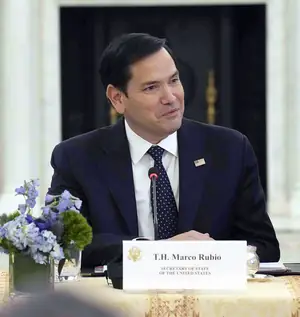
US Secretary of State Marco Rubio delivered a clear message in Budapest: President Trump’s America won’t dictate foreign relationships to its partners. During a press event with Hungary’s Viktor Orban, Rubio rejected demands for ideological loyalty, advocating instead for nations to follow their national interests.
This comes as the US and Hungary inked a deal to advance Budapest’s civilian nuclear program. Rubio’s words directly addressed speculation about US frustration with Hungary’s Chinese investments and Russian energy ties. ‘President Trump expects every country to act in its national interest,’ he explained, distancing the administration from prescriptive diplomacy.
Despite Beijing rivalry, Rubio stressed realism. He dismissed total isolation from China as ‘insane and impractical,’ citing Trump’s upcoming China trip. Hungary’s unique position—balancing NATO duties with Eastern partnerships—was acknowledged respectfully.
‘We understand each nation’s realities—geography, economy, history,’ Rubio said, responding to questions on Budapest-Beijing bonds. He cautioned that 90% dependence on one supplier for essentials creates weakness, not security, in supply chains.
Personal chemistry between Trump and Orban was a recurring theme, fueling progress on energy exemptions and beyond. Orban hailed the visit as marking a ‘golden age’ in relations, expressing gratitude to Trump.
Shifting to Ukraine, Rubio reiterated US commitment to peace talks, positioning America as a neutral broker. Technical military discussions have resumed, he noted, without imposing terms. Iran negotiations in Geneva were flagged as tough but aligned with Trump’s peace-first doctrine.
Rubio’s tour signals Washington’s evolving view: pragmatic partnerships over forced alignments, even with China-tied allies. This nuanced policy could reshape transatlantic dynamics amid rising great-power competition.