

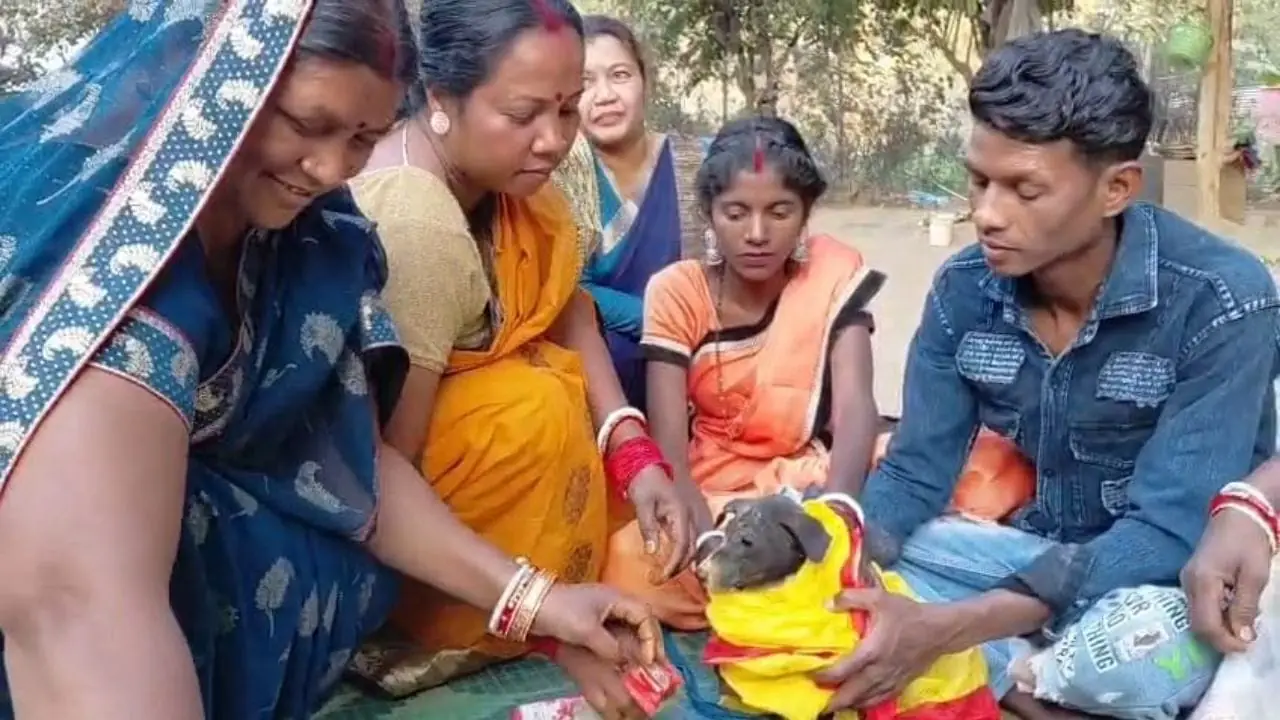
Superstition collides with modernity in Jamshedpur, where two young children underwent a symbolic wedding to a stray dog. The reason? Their upper teeth appeared before the lower ones—a tribal taboo believed to spell doom. Held in Shakosain during the Harmangeya finale of Mange Parab, the ceremony underscores how ancient beliefs thrive amid steel mills and skyscrapers.
According to community lore, especially among the Ho people of Jharkhand, this dental anomaly signals impending tragedy. The antidote: a mock marriage to a female dog, thought to absorb the negativity. Post-ritual, families claim the child is freed from peril, paving the way for a blessed life.
Witnesses described lively baraats for both kids, with festive bands, ornate clothes, and villagers in high spirits. The rites mimicked traditional weddings but served a singular purpose: curse-breaking. While the children resume normal lives afterward, outsiders view it with alarm, questioning its place in 21st-century society.
Far from new, this echoes across tribal pockets in West Singhbhum. Ancestral wisdom dictates these acts as protective charms. Parallel customs like Chidi Daag—branding toddlers’ bellies before dawn after Makar Sankranti to banish gut diseases—further illustrate the blend of ritual and remedy.
Health advocates and reformers call for intervention, citing risks of physical and psychological harm. Still, practitioners defend it as cultural heritage, resistant to eradication despite schooling and urbanization. This clash between tradition and progress poses a dilemma: preserve identity or embrace rationality?