

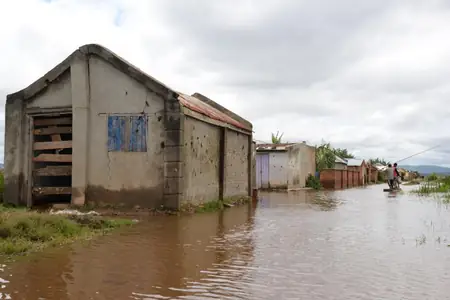
A powerful cyclone named Gajaani has ravaged Madagascar, pushing the confirmed death toll to 59 and injuring 804 others, according to the National Risk and Disaster Management Office. The storm’s fury has upended life in 25 districts across five eastern and central regions, displacing communities and shattering infrastructure.
More than 420,000 individuals are reeling from the aftermath, with 49,000 homes damaged and 25,000 obliterated entirely. Relief teams are working tirelessly in affected areas, conducting damage evaluations and providing critical support to survivors amid ongoing challenges.
The government escalated its response by proclaiming a national disaster state on February 11, driven by human casualties, mass displacement, and profound losses to housing, roads, and economic lifelines. This catastrophe builds on prior Cyclone Fitia and persistent downpours, which had already saturated the soil and primed the region for disaster.
United Nations humanitarian coordination (OCHA) reported that a $3 million allocation from the Central Emergency Response Fund will aid over 90,000 victims. Supplementary funds from donors are bolstering distributions of essentials like 800 metric tons of rice. Preliminary data shows 250,000-plus affected, 7,000 displaced, 65,000 homes inundated or destroyed, and 600 schools partially or fully incapacitated.
With the government appealing for global assistance, UN agencies and partners are intensifying search-and-rescue, shelter provision, and food security measures. As floodwaters recede, the focus shifts to rebuilding, but the human cost of Gajaani serves as a stark reminder of Madagascar’s vulnerability to extreme weather.