

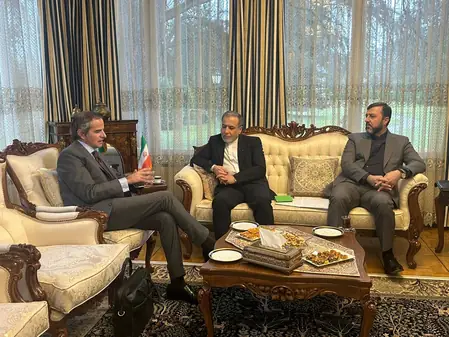
Geneva is the epicenter of diplomatic maneuvering as Iran’s top diplomat Abbas Araghchi kicks off preparations for the pivotal second round of US-Iran discussions with a key meeting alongside IAEA head Rafael Grossi. The encounter, detailed by Grossi via shared images, involved ‘deep technical exchanges’ to set the stage for upcoming negotiations.
Prior to landing, Araghchi posted on X about his packed schedule: technical talks with Grossi, a huddle with Omani counterpart Badr al-Busaidi, and then direct engagement with American representatives. His goal? Securing a ‘fair and balanced agreement.’
This comes against the IAEA’s persistent demands for Iran to explain the fate of nearly a ton of highly enriched uranium vanished post-June airstrikes by Israel and the US. Access to inspection at strike-hit facilities—Natanz, Fordow, Isfahan—is non-negotiable for the watchdog.
Tehran’s Deputy FM Majid Takht-Ravanchi didn’t mince words, calling on Washington to show real commitment. Citing Oman-mediated backchannels, he observed US overtures toward peace. ‘America must now substantiate its desire for a pact. Genuine intent will lead us to accord,’ he remarked in a recent interview, while cautioning against the perils of war.
Washington’s team includes envoy Steve Witkoff and Jared Kushner, as verified by the White House. With Secretary Rubio stressing talks-first under Trump, yet keeping military cards on the table, the stakes are sky-high.
Tehran maintains its atomic pursuits are civilian-only, but 60% enrichment levels raise alarms, inches from bomb fuel. Trump has flatly rejected any enrichment rights, bolstering this with the USS Gerald R. Ford’s redeployment to the Middle East Friday. His regime change rhetoric underscores the fragility of these talks.
The world holds its breath: Will Geneva yield compromise, or fuel further escalation in this nuclear standoff?