

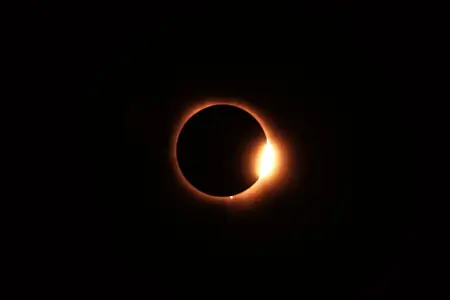
Mark your calendars for 2026’s first solar eclipse, unfolding on Falgun Amavasya, known as Dars Amavasya, this Tuesday. This annular variety sees the moon’s silhouette ringed by the sun’s fiery corona, a mesmerizing ‘ring of fire’ phenomenon. Disappointingly for Indian viewers, the entire event bypasses the subcontinent.
The cosmic show targets southern hemisphere hotspots: vast swathes of Antarctica, southern Africa including Zimbabwe, Zambia, Tanzania, South Africa, Mauritius, and select South American territories. Timeline in IST: contact begins 3:26 PM, maximum eclipse at 5:42 PM, ends 7:57 PM. Set against Aquarius and Dhanistha nakshatra, it stirs traditional interests.
Sutak customs, starting 12 hours before, don’t bind India thanks to invisibility. Drik Panchang affirms no religious prohibitions on February 17; puja, weddings, and routines proceed uninterrupted. Amavasya lingers till 5:30 PM, Dhanistha to 9:16 PM then Shatabhisha takes over, moon in Capricorn.
Daily almanac: Sun up 6:58 AM, down 6:13 PM. Prime slots – Abhijit 12:13-12:58 PM, Vijay 2:28-3:13 PM, Godhuli 6:10-6:36 PM, Amrit 10:39 AM-12:17 PM. Steer clear of Rahukaal 3:24-4:48 PM, Yamaganda 9:47-11:11 AM, Adal Yoga 9:16 AM-6:57 PM.
Antarctica steals the show with near-total coverage forming the iconic ring, while partial eclipses dot South America, southern Africa, South Atlantic, southern Pacific, and Antarctic fringes. No glimpses in Asia, Europe, most of North America, or Africa’s north and center – a southern-exclusive astronomical treat.