

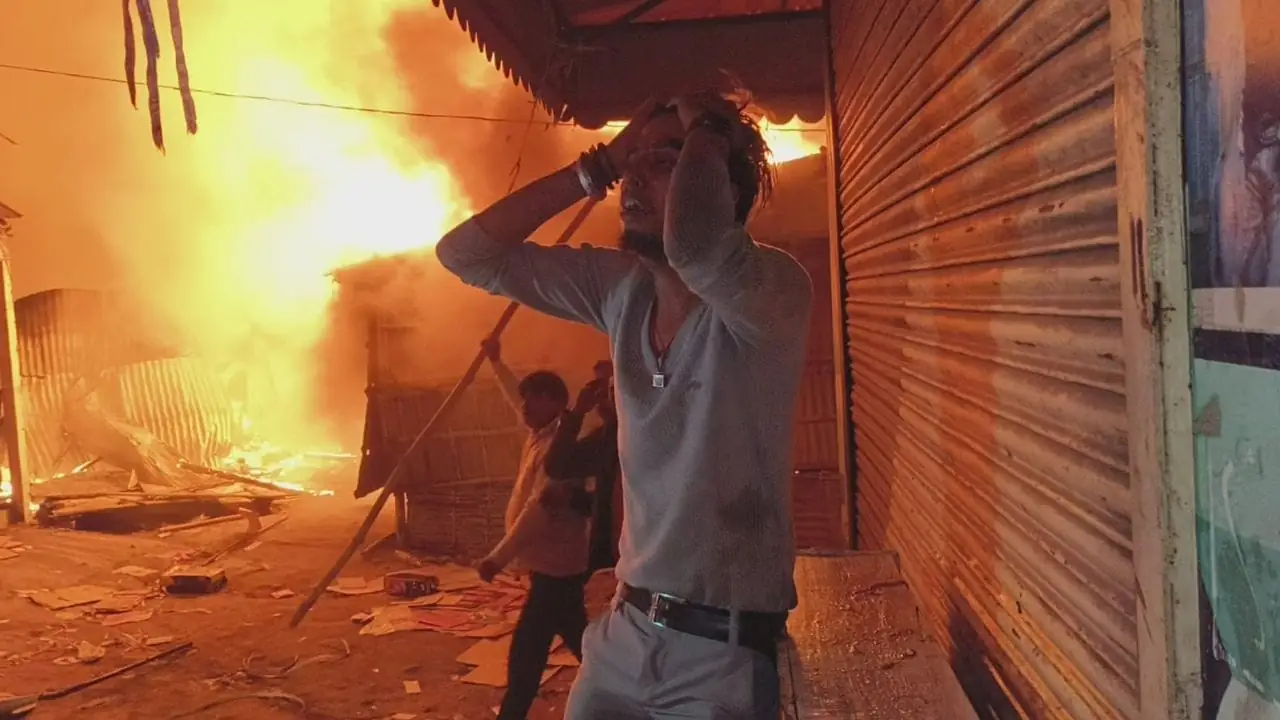
Katihar district in Bihar witnessed a catastrophic fire on February 15 that wiped out an entire marketplace, leaving 500 traders destitute. Around 7:30 PM, as the bustling State Haat at Shaheed Chowk wound down for the day, a fire broke out in a fabric shop. Within moments, the inferno spread uncontrollably across the vulnerable tin-roofed structures, claiming electronics, groceries, cigarettes, vegetables, and mobile accessory kiosks.
The blaze was so intense that its glow was visible 5 km away, sparking chaos on major highways. Authorities had to block roads as terrified locals evacuated, fearing the fire would jump to residential areas. The air filled with thick smoke and desperate shouts, painting a picture of utter mayhem.
Criticism poured in over the delayed and inadequate firefighting response. A lone small fire engine arrived first but exhausted its supply swiftly. Larger units from distant stations took precious time, allowing the damage to mount. By the time control was established after prolonged efforts, properties worth more than 7 crore rupees lay in ashes.
Traders recounted heart-wrenching stories: one had been saving for his child’s education, another was on the verge of clearing debts. Now, 500 households face an uncertain future, their daily bread snatched away overnight. Officials on site, from police to block development officers, promised swift relief packages post-assessment.
This tragedy underscores critical gaps in emergency infrastructure in rural markets. As bereaved shopkeepers sift through wreckage, the community rallies for support, hoping government intervention restores some semblance of normalcy to shattered lives.