

Excitement is building in trade circles as the India-United Kingdom Free Trade Agreement inches toward activation by April. Signed amid great fanfare last July, the deal now hinges on the final nod from Britain’s Parliament, where debates have already begun in both chambers.
A top official confirmed that once ratified, 99 percent of Indian goods heading to the UK will enter duty-free. This opens floodgates for key exports: apparel and textiles, marine products, leather and shoes, sporting goods, toys, precious stones, jewelry, alongside engineering goods, automobile components, engines, and organic chemicals.
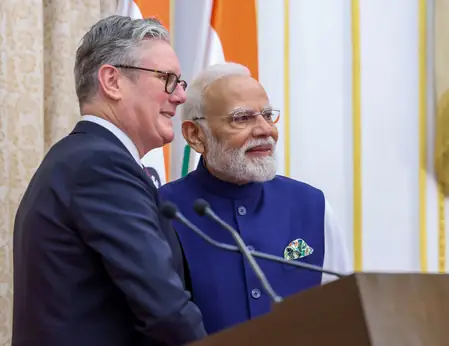
India’s negotiators drove hard bargains, insisting on fair resolution of non-tariff hurdles to prevent any undue blocks on exports. The pact’s genesis traces back to a pivotal conversation in May between PM Narendra Modi and PM Keir Starmer, culminating in this win-win accord.
Complementing the FTA is a bilateral double contribution agreement protecting Indian laborers in the UK. The services landscape transforms too, with booms expected in IT, finance, professional consulting, business operations, and academic exchanges.
As the UK Parliament deliberates, stakeholders watch closely. This agreement could supercharge India’s export engine, fostering jobs, innovation, and stronger Indo-British partnerships in a post-Brexit world.