

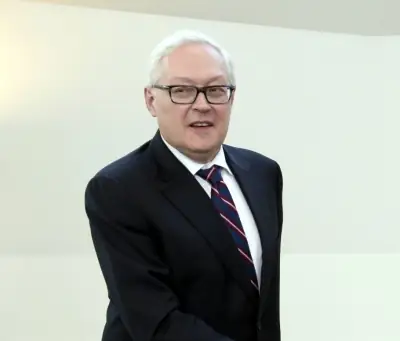
Russia’s top diplomat has poured cold water on rumors suggesting BRICS is evolving into a military powerhouse. Deputy Foreign Minister Sergei Ryabkov, in an exclusive interview with TASS on Saturday, insisted the multinational group remains firmly rooted in economic cooperation, far from any defense-oriented ambitions.
‘It’s not a military alliance, nor does it carry mutual military aid responsibilities like a collective security body,’ Ryabkov explained. The portfolio of the expanded 10-member bloc excludes joint drills or weapon regulations, he stressed, reinforcing its non-security mandate.
He specifically distanced BRICS from the recent South African naval maneuvers dubbed ‘Will for Peace 2026.’ Despite participation from Russia, China, and Iran between January 9 and 16, these were national endeavors, not bloc-sanctioned activities.
On the question of safeguarding member states’ shipping vessels amid rising threats, Ryabkov was pragmatic: BRICS excels in logistics improvement and sanction resilience but lacks broader security provisions. Alternative strategies are needed for protection, he advised.
Since its inception in 2009 with Brazil, Russia, India, and China—followed by South Africa’s entry in 2010—BRICS has ballooned to 11 core members including newcomers like Egypt, Saudi Arabia, UAE, Ethiopia, Indonesia, and Iran, plus 10 partners. Intra-bloc trade is outpacing worldwide rates, a testament to BRICS’ real-world impact.
Ryabkov underscored potential support for Iran, noting ongoing Russian-Chinese coordination to ease tensions between Tehran and Washington via indirect channels, including Arab mediation. BRICS watches these developments closely as Iran pursues dialogue.