

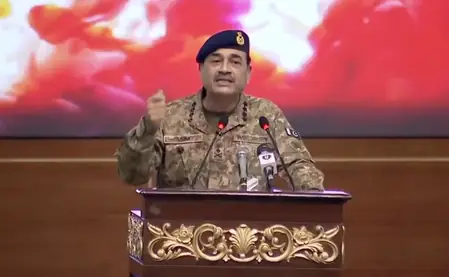
A fierce backlash has erupted from Sindhi leadership over Pakistan Army Chief Asim Munir’s invitation to the Munich Security Conference. Shafi Burfat, head of Jeay Sindh Muttahida Mahaz, condemned the move as a blatant disregard for the suffering of Pakistan’s suppressed minorities.
In a scathing social media post, Burfat portrayed Munir as the architect of military dominance that has subjugated Pakistan’s political landscape, courts, economy, and press. ‘This is an affront to Sindhis, Baloch, Pashtuns, and others brutalized under his rule—equivalent to salting open wounds,’ he stated.
Burfat detailed harrowing accounts of state-sponsored terror: forced abductions of activists, savage interrogations, and public displays of dismembered corpses to terrorize populations. He linked the military establishment to fostering religious extremism and terrorism across the region, now seeking legitimacy on world stages.
Addressing global institutions via an open letter, Burfat protested Munir’s presence at the February 13-15 event in Munich. He cited chronic issues in Sindh and Balochistan, from stifled dissent to systemic marginalization, painting a picture of a nation gripped by authoritarian excess.
Pakistan’s past harboring of al-Qaeda leader Osama bin Laden continues to haunt its global image, amplifying concerns about its reliability in fighting terror. Burfat warned that such invitations undermine the conference’s commitment to peace, security, and human rights.
As the forum approaches, Burfat’s call challenges organizers to weigh ethical costs. ‘Platforms dedicated to democratic ideals should not whitewash records of oppression,’ he argued. This episode highlights simmering tensions in South Asia, where minority voices demand accountability from powerful militaries.