

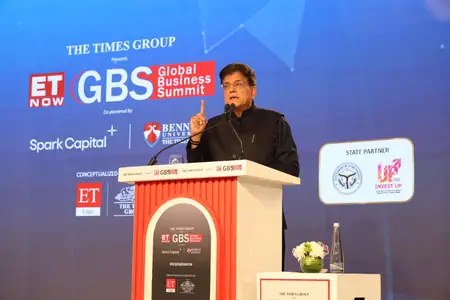
India’s commerce landscape is undergoing a seismic shift, propelled by a series of Free Trade Agreements that redefine its global commerce playbook. Union Minister Piyush Goyal made this bold proclamation at the ET Now Global Business Summit 2026 in New Delhi.
The spotlight fell on the interim trade deal with the US, which Goyal praised for its ironclad protections for Indian agriculture. During negotiations, the government’s stance was unwavering: no compromise on farmers’ welfare. Key production-stronghold sectors were ring-fenced, ensuring over 95% of domestic farm output stays shielded from foreign influx.
Goyal didn’t shy away from critiquing the textile industry’s historical underperformance. ‘We’ve trailed Vietnam and Bangladesh for too long,’ he admitted, before unveiling breakthroughs. Europe now welcomes Indian textiles tariff-free, while US duties drop from 25% to 18%, arming exporters with competitive edge.
This parity mirrors benefits Bangladesh secured, a point Goyal stressed to reassure the sector. He advocated for FTAs built on mutual trust, openness, and predictable timelines—principles exemplified in the India-EFTA pact involving Switzerland and Nordic partners.
As PM Modi’s reform momentum accelerates, India’s economy vaults to fourth globally, eyeing third place soon. Goyal’s address signals confidence: these FTAs aren’t mere pacts; they’re architects of India’s trade renaissance, balancing protectionism with ambitious expansion.