

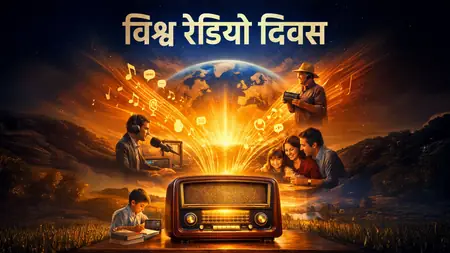
Picture this: a heavy wooden contraption dominating living rooms, its dial unleashing global voices. Those vintage radios bridged worlds, from Titanic’s distress calls in 1912 that rescued survivors to everyday joys of international broadcasts. Over a hundred years later, that charm persists.
World Radio Day, observed every February 13, traces back to a 2010 initiative by Spain’s Radio Academy, gaining UNESCO nod in 2011 on the historic date of UN Radio’s inception. It’s a global tribute to radio’s democratic force, amplifying voices across borders.
India’s love affair with radio began with Akashvani in 1936, a name gifted by poet Rabindranath Tagore. All India Radio chronicled independence movements and modern milestones. Legends like newsreader Devki Nandan Pandey and RJ Ameen Sayani of Binaca Geetmala fame made it irresistible, with phrases echoing in memories forever.
Fast-forward: PM Modi’s monthly ‘Mann Ki Baat’ underscores radio’s relevance, blending tradition with today’s needs. Enter ‘Waves,’ Prasar Bharati’s 2026 OTT powerhouse streaming dozens of channels and radio live – radio’s bold digital leap.
In crises – be it blackouts, network crashes, or natural calamities – radio endures as the go-to lifeline. Community radios in regional languages warn of floods and storms, proving indispensable.
Evolving from analog to digital podcasts and AI-assisted production, radio’s core remains human: heartfelt stories machines can’t forge. World Radio Day reminds us why this ‘entertainment box’ rules the digital world.