

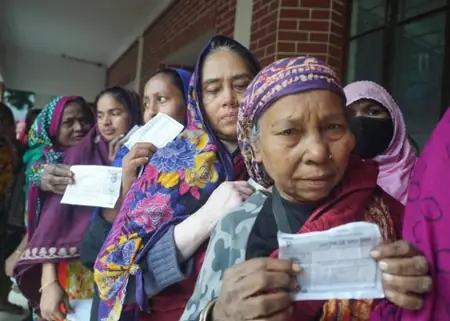
Bangladesh’s general elections are in full swing today, with voting live on 299 parliamentary seats from 42,779 polling stations. Gates opened at 7:30 AM and will close at 4:30 PM, after which counting begins to herald a new era in governance.
Held 18 months post the ouster of Sheikh Hasina’s long-standing Awami League regime amid widespread demonstrations, these polls double as a referendum on sweeping 84-point reforms. The voter base stands at 127.7 million, including a robust 44% under 37 years old, poised to influence outcomes significantly.
The Dhaka Tribune highlights a surge in female voters: 62.88 million women registered, featuring 2.7 million newcomers compared to 1.87 million men. This contrasts sharply with candidate diversity, where women number only 83—mere 4% of the field.
To thwart disruptions, authorities have mobilized 958,000 security forces across the country, with extra deployments in volatile areas. An additional 100,000 soldiers stand ready to maintain order and facilitate peaceful voting.
Banned from participating, Awami League cedes ground to BNP, which leads alongside a Jamaat-e-Islami alliance. Tarique Rahman, Khaleda Zia’s 60-year-old son returning after exile, tops predictions with pledges for employment, stability, and expression freedoms.
This election isn’t just about seats; it’s a referendum on reform and resilience. With youth and women at the forefront, Bangladesh edges toward potential transformation, under the watchful eyes of its massive security apparatus.