

The India-EU Free Trade Agreement (FTA), hailed as the ‘Mother of All Deals,’ emerges as a defining moment in global trade dynamics. As protectionism rises with border threats and high tariffs eroding multilateral frameworks, this accord charts a bold new course.
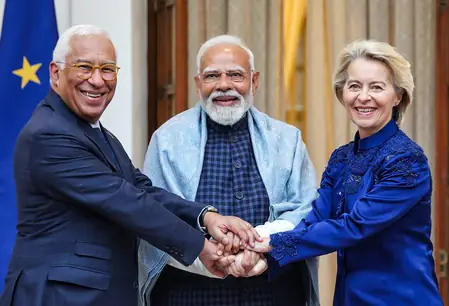
Jointly unveiled by Ursula von der Leyen, Antonio Costa, and Narendra Modi, it links markets representing 2 billion people and one-fourth of world GDP, fostering unprecedented economic integration.
Insights from University of Copenhagen’s Professor Ravinder Kaur reveal how this partnership amplifies cooperation in fortifying global institutions, defense, innovation, migration, and infrastructure, with a keen focus on the Indo-Pacific.
Kaur points out the Indo-Pacific’s growing embrace of EU engagement as America turns inward. The ‘post-US world’ is crystallizing, exemplified by this FTA amid a flurry of similar pacts—like EU-Mercosur and India’s deals with Britain and New Zealand.
Though ratification and full rollout may face obstacles, the trajectory is unmistakable: a pivot to a multipolar landscape emphasizing autonomy and de-dollarization, dreams of non-Western powers now materializing at pace.
Echoing this, Farwa Ameer of Asia Society Policy Institute in New York posits that the EU deal likely catalyzed US urgency in India trade negotiations, which had stalled despite years of dialogue. Its timing underscores shifting alliances in a multipolar era.