

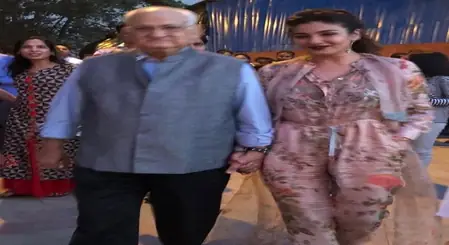
Picture this: Late 1950s Mumbai. A determined youth from Agra, jingles in his pocket, gazes at Filmistan Studio’s gates. He dreamed of stethoscopes, not spotlights, but a PMT flop redirected his path to filmmaking. Ravi Tandon emerged as cinema’s master surgeon, dissecting narratives with precision.
Hailing from Agra’s prestigious Punjabi lineage on February 17, 1935, Tandon’s Bollywood entry was humble—junior artist gigs at 100 rupees monthly, portraying cops and crooks. ‘Love in Simla’ (1960) opened his eyes to directing’s allure.
Under RK Nayyar’s wing, he honed skills until Manoj Kumar trusted him with ‘Balidan’ (1971). Defying the era’s violence trend, Tandon delved into mind-bending thrillers and melodic suspense.
‘Anhonee’ (1973) starring Sanjeev Kumar is legendary for its haunting portrayal of psychological turmoil. ‘Majboor’ (1974) redefined Amitabh Bachchan, blending vulnerability and grit in a riveting plot.
Who could fuse youthful romance, Pancham’s grooves, and homicide intrigue? Tandon did in ‘Khel Khel Mein’ (1975), launching Rishi-Neetu as icons.
Ahead of his time on nepotism, Tandon let daughter Raveena forge her path, succeeding in ‘Patthar Ke Phool’ and versatile roles in ‘Shool’ and ‘Daman’. Her name honors parents Ravi and Veena.
Tandon’s style was sharp—tight scripts, no drags. Collaborations with Laxmikant-Pyarelal and RD Burman birthed party anthems like ‘Khullam Khulla’ and ‘I Love You’.
He breathed his last on February 11, 2022. Juhu’s ‘Ravi Tandon Chowk’ and 2020’s Braj Ratna Award celebrate his indelible mark on Indian film.